G-FORCE TO MARS
| CONTENT |
|---|
| Getting There With Fuel |
| Accelerate to Midpoint |
| Decelerate to Destination |
| Total Trip Time |
| Propulsion System |
| Particle Source |
| Cultural History About Mars |
| Profile Range: 1.0 AU |
|
| g | ≈ | 10 m/sec sec | ≈ | 864 km/sec day | ≈ | 1,728 km/sec 2 days |
|---|
EQUIVALENCE: Crew and passengers enjoy Earth like gravity due to the constant push from the ship's continuous acceleration. In flight comfort is greatly increased.

The quickest g-force flights will happen at the minimum distance. Earth-Mars opposition which brings the two planets to about 0.5 AU. Thus, thought experiment assumes 0.5 AU as minimum distance between Terra (aka "Earth") and Mars.
 Sidereal Period,T, is duration for an object to compute an entire orbit past a fixed celestial refercne, perhaps the Line of Aries . This duration is regarded as the object's true orbital period. God's view from up North shows both planets rotating counter clockwise (CCW).
Synodic Period, P, is the duration between successive oppositions. Most Earth bound mortals observe synodic periods. For example, Mars actually revolves around Sol at .524°/day (sidereal). However, Earth's sidereal rate is much faster (CCW at .999°/day). Thus, Earth bound observers see Mars revolving at the difference, ωΔ = 0.475°/day, Mars's Synodic rate with respect to Earth.
| ωΔ | = | ωEarth | - | ωMars |
|---|---|---|---|---|
| .475°/day | = | .999°/day | - | .524°/day |
| P | = | 360°/ωΔ | = | 758 days |
 About every 758 days, Synodic opposition brings Earth and Mars to about .5 AU apart.
--Consider all Earth-Mars oppositions from Feb 22, 1901 to Sep 15, 2035.
--Distances vary from .37 to .68 AU with an average of .55 AU.
--Intervals between successive oppositions range from 757 to 798 Earth days with an average of 769 days.
 |
In this example, three tenths day (.3D = 2.4 hours) of g-force takes the vessel about .025 AU. A complete day of g-force takes ship to .25 AU, half of the minimum distance between Earth and Mars. This occurs at Mars's opposition when Earth is directly between Sol and Mars (co-linear).
As the flight progresses, acceleration takes the ship to ever greater velocities. Thus, above time and distance scales show that .1 day increments cover ever greater distance as time increases. Thus, first day of g-force acceleration brings ship to 864 km per second (compares to just 11 km/sec velocity to escape Earth's orbit).
Let d be distance between departure and destination.
Example: At Mars opposition, distance (d) from Earth to Mars can be .5 AU. If vessel accelerates to midway (dMid = d/2); then, acceleration time, tAcc, is:
Recall Newton's Motion Equations: tAcc = √(2×dMid/g)
Which can be restated: tAcc= √(d/g)
Recall g (10 m/sec2) can be restated as .5AU/day2: tAcc= √(.5 AU/(.5AU/day2)) = 1 day
|
 | |||||||||||||||||||||||
Since 864 km/sec is way too fast to orbit Mars, spaceship must slow down.
To continue g-force for the slow down portion of flight, we must decelerate at the same rate that we accelerated.
Thus, distance/time for deceleration phase must equal distance/time for acceleration phase. At midpoint, we reverse direction of g-force propulsion vector as shown in diagram. Therefore, it takes another day of g-force deceleration to travel the remaining .25 AU to Mars.
|

 While current technology uses constant velocity spacecraft to reach Mars in several months, Edgar Rice Burroughs (ERB) conveniently reduced it to nothing. Famous for creating the Tarzan character, ERB also wrote a series of popular fictional novels about Mars. Several of his Martian novels While current technology uses constant velocity spacecraft to reach Mars in several months, Edgar Rice Burroughs (ERB) conveniently reduced it to nothing. Famous for creating the Tarzan character, ERB also wrote a series of popular fictional novels about Mars. Several of his Martian novels  had as the main character, John Carter, an American, who goes to sleep in a mysterious cave in the Arizona desert and wakes up on the planet Mars (“Barsoom” to the natives). He meets with many incredible adventures as well as many exotic Martian creatures. Edgar Rice Burroughs was born on Sep 1, 1875, in Chicago, IL. His father had been a Union major in the Civil War. He attended good schools; but he did poorly academically. During his young adult years, he worked as a cowboy in Idaho, a gold miner in Oregon, a railroad policeman in Utah, a department manager for Sears, Roebuck in Chicago. He didn't start writing until the age of 35. had as the main character, John Carter, an American, who goes to sleep in a mysterious cave in the Arizona desert and wakes up on the planet Mars (“Barsoom” to the natives). He meets with many incredible adventures as well as many exotic Martian creatures. Edgar Rice Burroughs was born on Sep 1, 1875, in Chicago, IL. His father had been a Union major in the Civil War. He attended good schools; but he did poorly academically. During his young adult years, he worked as a cowboy in Idaho, a gold miner in Oregon, a railroad policeman in Utah, a department manager for Sears, Roebuck in Chicago. He didn't start writing until the age of 35.ERB's first Mars book was written under the pseudonym Norman Bean. Most of his stories are written in the first person. Russian dictator Joseph Stalin once said that Edgar Rice Burroughs was his favorite author. An excellent guide to Burroughs' Mars books is "A Guide to Barsoom" by John Flint Roy. |
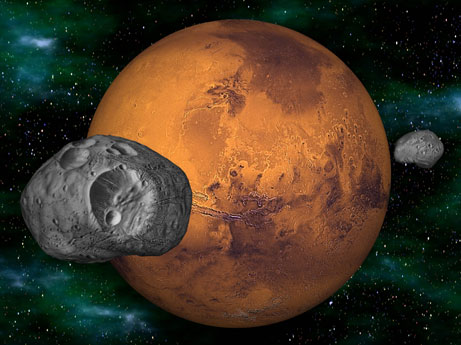
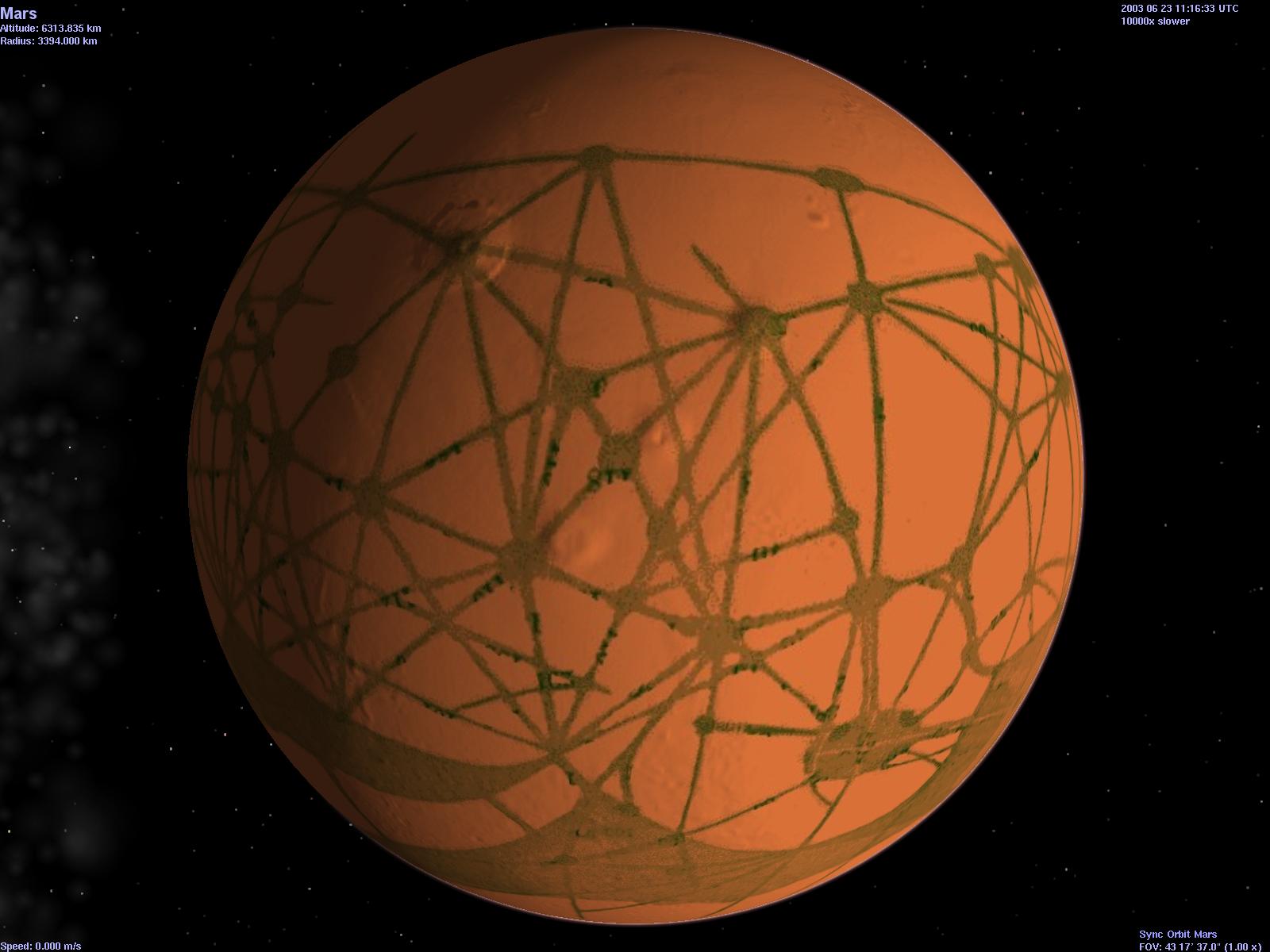
Surprisingly, Edgar Rice Burroughs was inspired to write about Mars on the basis of then current science. Mars was always an intriguing world. From prehistorical times, Mars has been readily visible; however, the first recorded formal observation was by Aristotle in 356 B.C. Galileo viewed it through his telescope on Mars in 1610 to record the phases.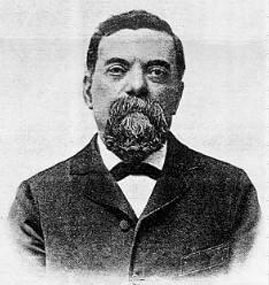 In 1877, Schiaparelli was the first astronomer to identify the illusory features as Canals and produced a detailed map of Mars. This same year, the two Martian moons, Phobos and Deimos, were discovered. So there was a kind of ‘plausibility by association.’ If one new feature (the moons) were accepted, why not accept the other (the canals).Schiaparelli repeated and elaborated on his observations two years later in another close approach in 1879, eventually identifying some sixty distinct canal like structures. He called them ‘Canali’ or channels, which did not necessarily mean they were products of intelligent life. Canals were next observed nine years later by a pair of astronomers but only infrequently thereafter.Martian canals were being spotted independently by several observers, and their observations seemed fairly consistent. This suggested something real; so, the scientific and popular communities generally accepted their existence. In 1877, Schiaparelli was the first astronomer to identify the illusory features as Canals and produced a detailed map of Mars. This same year, the two Martian moons, Phobos and Deimos, were discovered. So there was a kind of ‘plausibility by association.’ If one new feature (the moons) were accepted, why not accept the other (the canals).Schiaparelli repeated and elaborated on his observations two years later in another close approach in 1879, eventually identifying some sixty distinct canal like structures. He called them ‘Canali’ or channels, which did not necessarily mean they were products of intelligent life. Canals were next observed nine years later by a pair of astronomers but only infrequently thereafter.Martian canals were being spotted independently by several observers, and their observations seemed fairly consistent. This suggested something real; so, the scientific and popular communities generally accepted their existence. Percival Lowell made his critical observations in 1892 and 1894 (close approaches of Mars to Earth) and wrote his popular book on Mars, undoubtedly read by Edgar Rice Burroughs.  Next close approaches happened in 1907 and 1909; these would have put Mars prominently in the news once again, only a few years before Burroughs wrote A Princess of Mars.Percival Lowell published his book “Mars” in 1895, when Burroughs was twenty. The work’s popularity was evidenced by articles in the New York Times (35 articles from 1895 to 1910) and the serialization of “Mars” in the Atlantic Monthly (Summer of 1895). Thus, Burroughs was likely aware of Lowell’s ideas; and many of Lowell’s facts about Mars turn up in Burroughs’s Barsoom. Next close approaches happened in 1907 and 1909; these would have put Mars prominently in the news once again, only a few years before Burroughs wrote A Princess of Mars.Percival Lowell published his book “Mars” in 1895, when Burroughs was twenty. The work’s popularity was evidenced by articles in the New York Times (35 articles from 1895 to 1910) and the serialization of “Mars” in the Atlantic Monthly (Summer of 1895). Thus, Burroughs was likely aware of Lowell’s ideas; and many of Lowell’s facts about Mars turn up in Burroughs’s Barsoom.These are some interesting parallels between Lowell’s Mars and Burroughs’ Barsoom; however, the most persuasive item is that it seems very likely that Burroughs used Lowell’s map in creating Barsoom. For more details, go to linked webpage: Burroughs’ Barsoom and Lowell’s Mars: A Map for the Interpretation of Barsoomian Geography by Leathem Mehaffey. Expanded Text. |
Thus far, we've established a g-force range of .5 AU.
Earth and Mars come this close about once every two years (Synodic Period = 758 days). We will increase this range. | ||||||||||||||||||||||||
TE assumes propulsion system will continuously increase capacity
such that ever increasing ranges will become more and more practical.
Thought experiment assumes quick technology improvements such that exhaust particles will exit spacecraft at 86.6% c. Previous work indicates that 0.326% of ship's weight transformed into exhaust particles would suffice to maintain g-force for one day (artificially assume an unrealistic fuel efficiency of 100%). Following table assumes a much more realistic efficiency of 10%.
|
| Range of 1.0 AU (blue circle centered on Earth) intersects Mars orbit about 190 days before Earth-Mars opposition. Observing the Synodic revolution, Mars approaches Earth about 0.475°/day; thus, the 90° from about initial intercept of 1 AU circle to Earth-Mars opposition takes about 190 days. | ||||||||||||||||||||||||||||||||||||||||
|---|---|---|---|---|---|---|---|---|---|---|---|---|---|---|---|---|---|---|---|---|---|---|---|---|---|---|---|---|---|---|---|---|---|---|---|---|---|---|---|---|
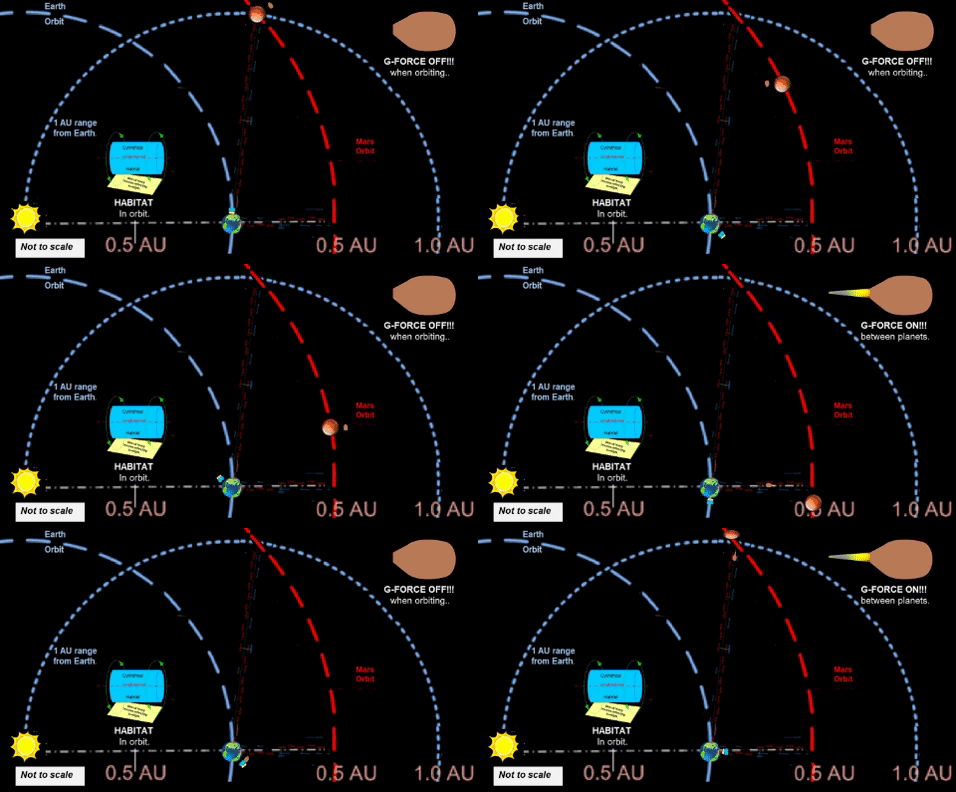
| During this 190 days from initial intercept of 1 AU circle (centered on Earth), the Earth-Mars separation decreases until the minimum at opposition. After opposition, distance to Mars increases until the separation once again is 1 AU at another 190 days.
Thus, Mars is within a 1.0 AU range for about 380 days every 25 months between Earth-Mars oppositions. During this approximate 380 day period, g-force spacecraft would require less then one week's total propulsion time to travel to/from Mars.
Dates for 190 days before (Nov 14, 2015)/after (Nov 28, 2016) opposition is easily determined using online Julian-Gregorian date converter. Finally,
NASA/JPL's excellent animated orbit tool can show how planetary positions change during these durations.
| |||||||||||||||||||||||||||||||||||||||
Range of 1.0 AU
increases g-force ship access to Mars.
For a 380 day duration (190 days before/after opposition)
For a 380 day duration (190 days before/after opposition)
a two way trip to Mars could take less than 6 days.
SLIDESHOW
| VOLUME 0: ELEVATIONAL |
|---|
| VOLUME I: ASTEROIDAL |
| VOLUME II: INTERPLANETARY |
| VOLUME III: INTERSTELLAR |
posted by JimODell at 5:12 AM


0 Comments:
Post a Comment
<< Home